RTA
How it started
I left home at 5:45am to hit the gym before work — one metro, two buses, carrying a gym bag, a laptop bag and a tiffin bag.
I got to the gym and realised the gym bag was still on the bus. I ran back to the station. The bus had gone.
I called the RTA helpline. Nobody picked up — it was too early. So I took the next bus to Rashidiya, reported it in person, went home for a change of clothes, and got to the office late.
Two hours later RTA called. They'd found it.
The whole way home I kept thinking: why is there no lost and found feature in the app?
Was it worth solving?
1.8 million people use Dubai public transport every day. There was no public data on how many lose something.
So I ran an Instagram survey among my UAE followers. Small sample — 154 viewers — but half of the daily RTA users said they'd lost something on the network.
Then I interviewed a few of them, and the research killed my idea. Everyone was fine with calling. Nobody asked for an app feature. Nobody described the current process as a problem.
Despite there being no stated need, I decided to trust my intuition and design it anyway — on the assumption that people would see the benefit once they could actually use it.
"Don't ask people what they want, show them and then get their feedback." — Steve Jobs
Let's see if trusting my intuition backfires.
How it works today
Call 8009090. Describe the item, where and when. Get a reference number. RTA searches. If they find it, they call you, and you collect it in person.
It works. But it's slow when you're already stressed, it depends on a call centre that isn't open at 5am, and in a city where most people aren't speaking their first language, describing a lost object over the phone is harder than it sounds.
From RTA's side it's manual data entry, follow-up calls, and a queue that spikes at peak times.
The design
I looked at how Careem and Uber handle lost items, and at lost-and-found features in transport systems elsewhere. Then I sat with a notebook and worked out two lists: what a person needs to tell RTA, and what RTA needs to verify a claim.
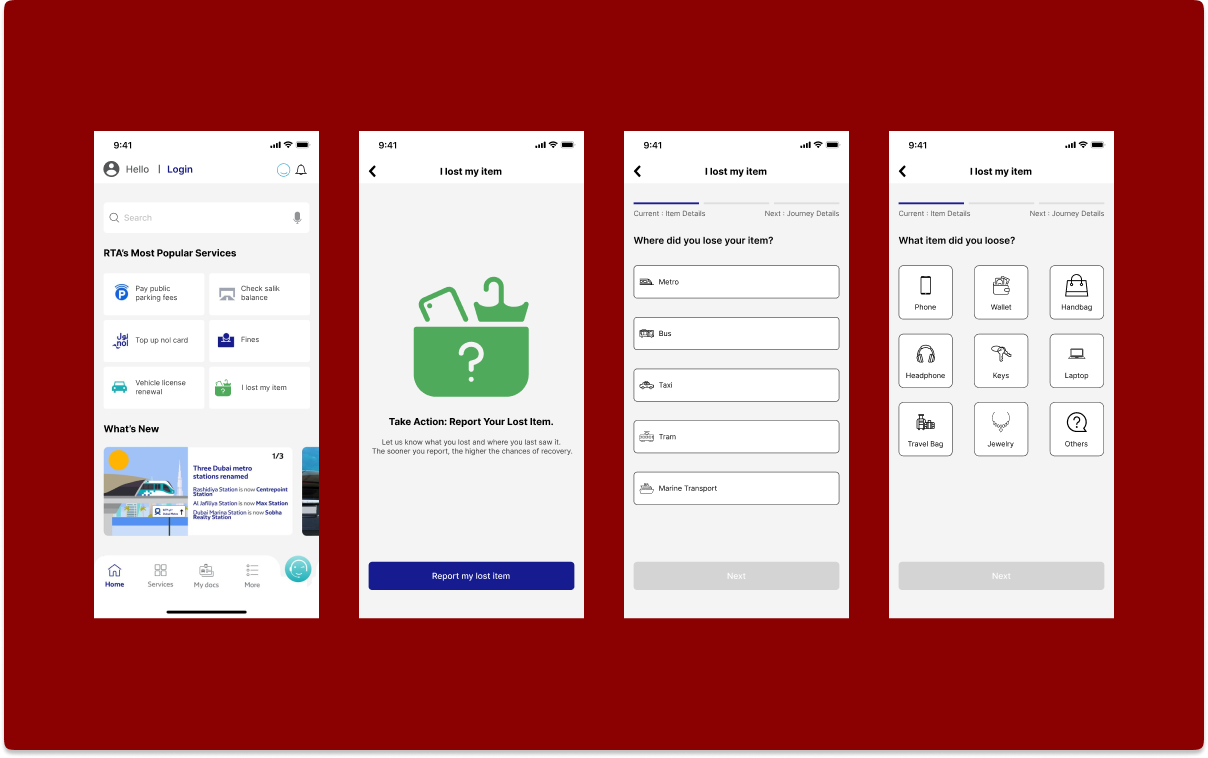
The decision that mattered was letting people report without logging in.
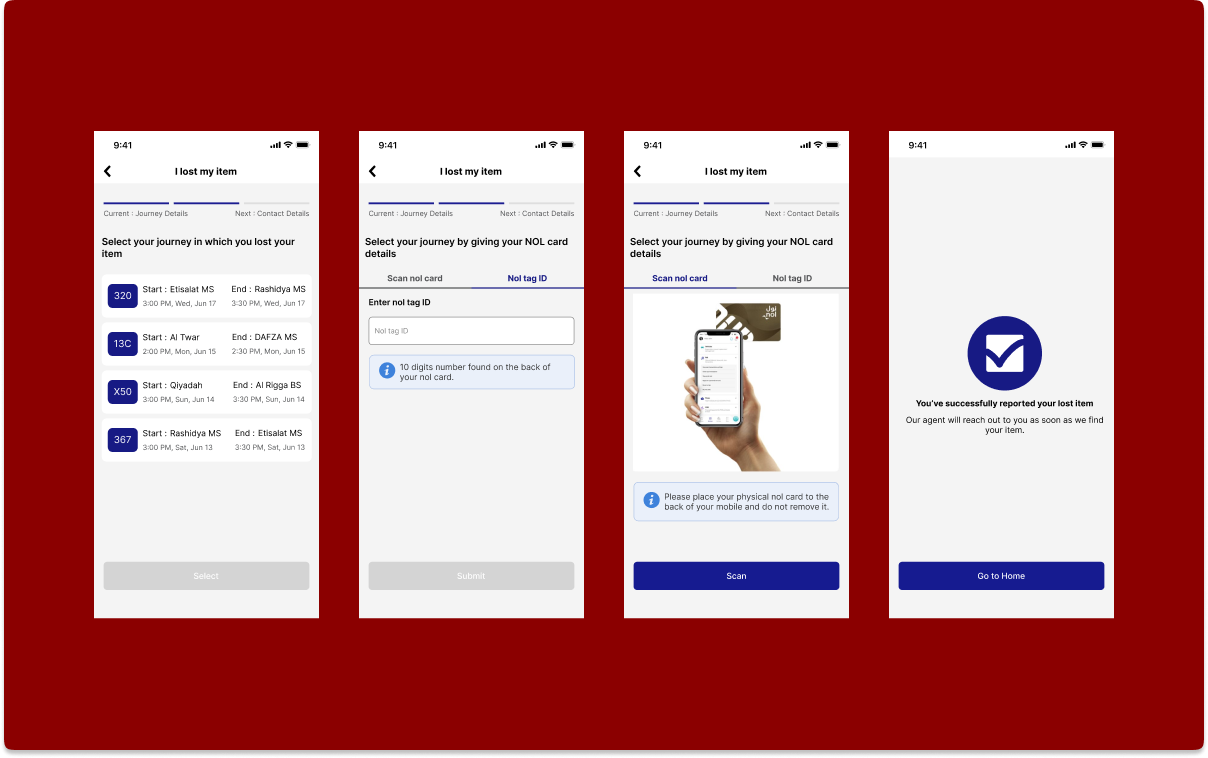
Someone who's just lost something is panicking and in a hurry. An account wall at that moment is the thing that sends them back to the phone. The verification RTA needs — description, route, time, contact number — doesn't require an account to collect.
I built it inside RTA's existing patterns rather than around my own, so it would look like part of the app instead of a redesign of it.
The response
Prototyped and tested in Maze with the same people who'd lost items on the network. They reported successfully without help.
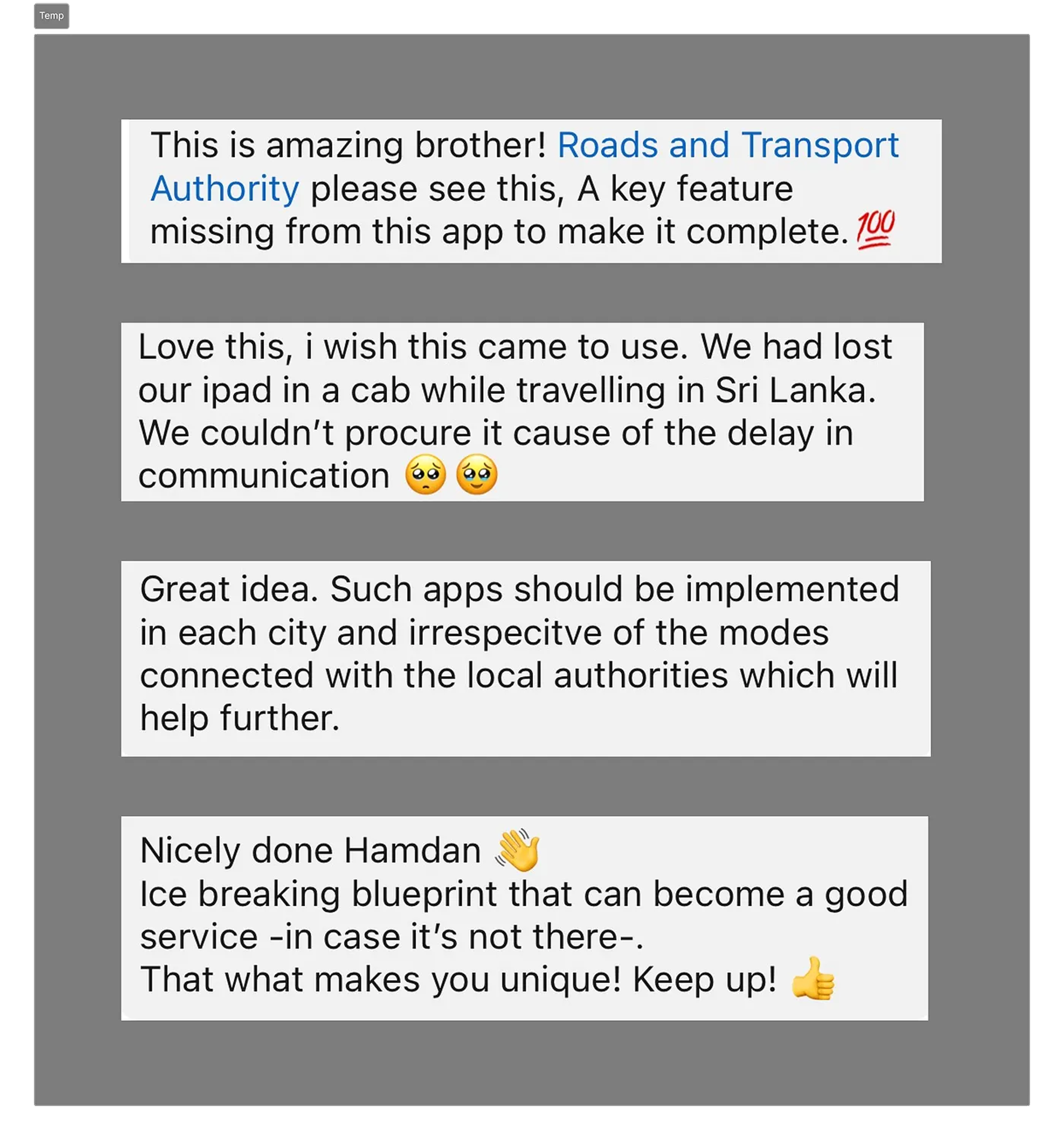
I posted the flow on LinkedIn. Several of the people who'd told me it wouldn't make a difference changed their minds once they could see it.
What happened
I wanted it to be real, so I went back to the station and pitched it to the officers who'd helped me find my bag. They liked it. They also had no way to reach anyone who makes decisions.
Someone suggested Digital Dubai. I wrote to them and never heard back. I pitched it again to an RTA officer I met in a cafe, who also couldn't connect me upward.
Nothing came of it — with RTA, anyway. The post brought inbound opportunities I wasn't looking for at the time.
That's the part worth keeping in. It was the right process, the design tested well, and it still went nowhere — because getting a good idea in front of the right person is a different problem from designing it.
Check out my process → Watch the 2-min pitch →