Smart NDA — Legal
1 · What is Smart NDA?
An AI product that reviews and analyses contracts for the legal team.
2 · What life looked like before it
Every NDA that reached the bank's legal team was opened in Word and read line by line. A lawyer checked for risky wording, compared it against the bank's own standard terms, and decided what to push back on.
Slow, inconsistent, and easy to miss something on your fifth document of the day.
My job was to understand how they actually worked before changing any of it. I'd never sat with a legal team — in my head they were the lawyers from Suits, buried in paperwork. So I spent the time learning the real version: what they check for, what they can and can't negotiate, where the same decision gets made forty times a week.
3 · How the tool works
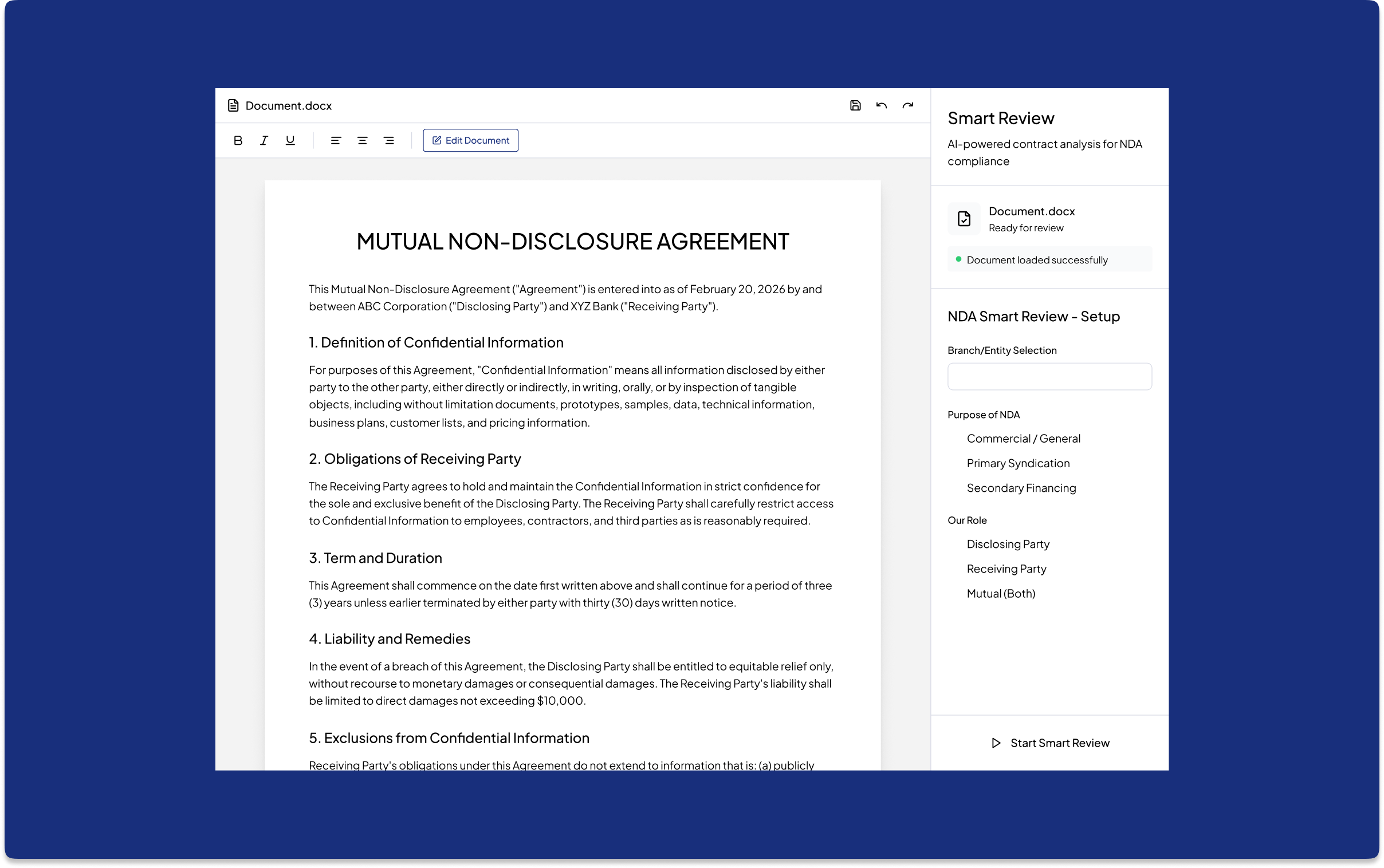
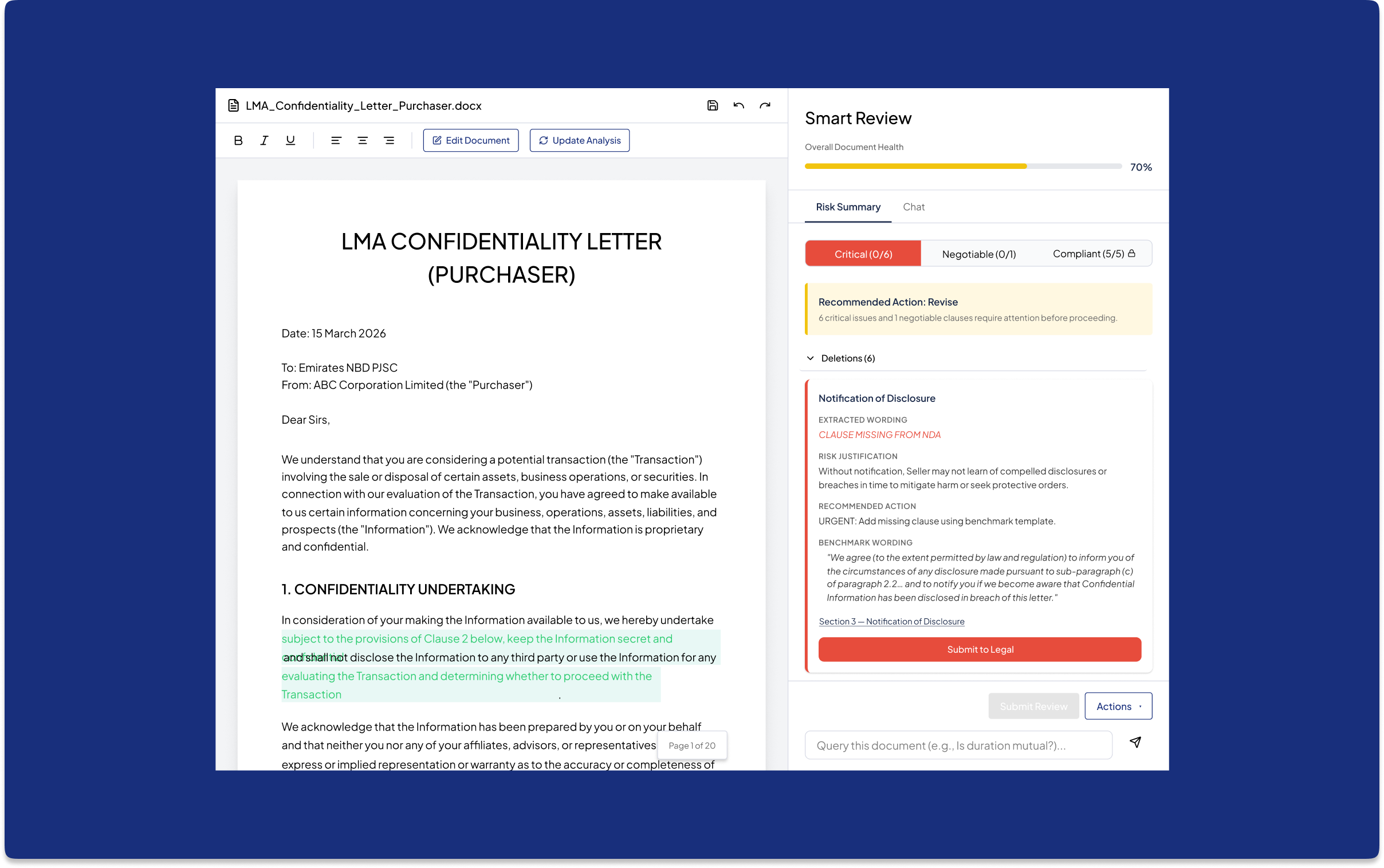
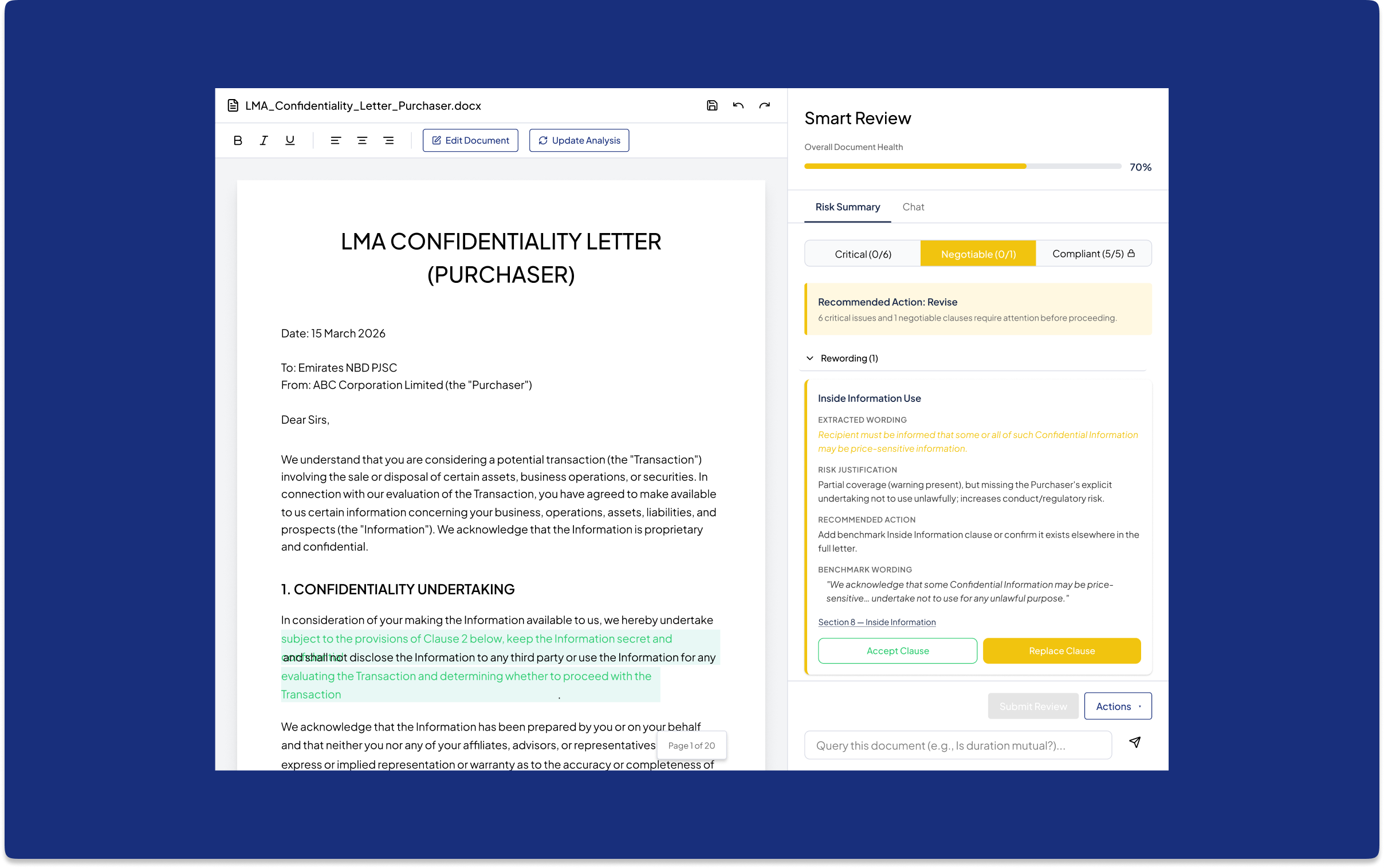
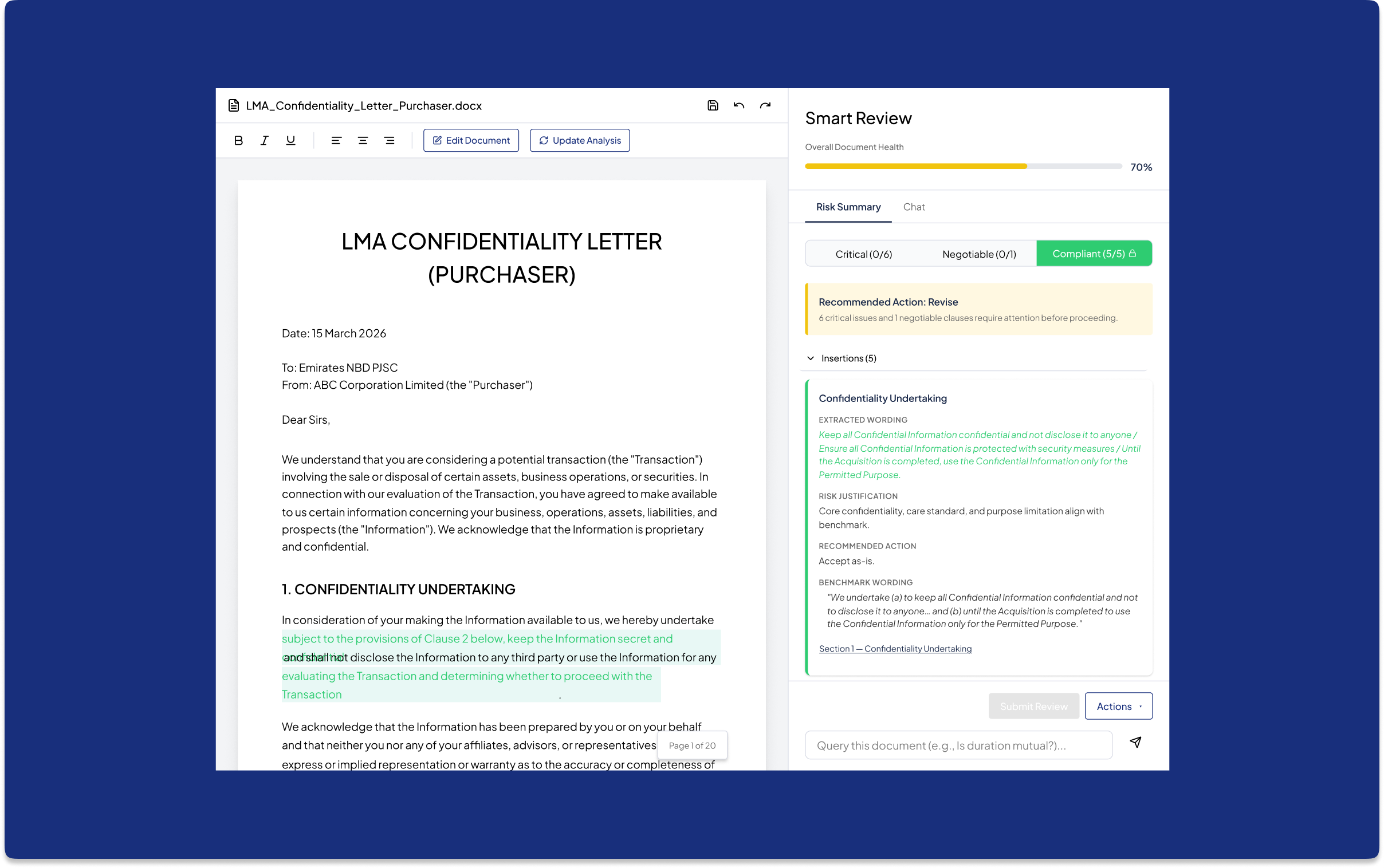
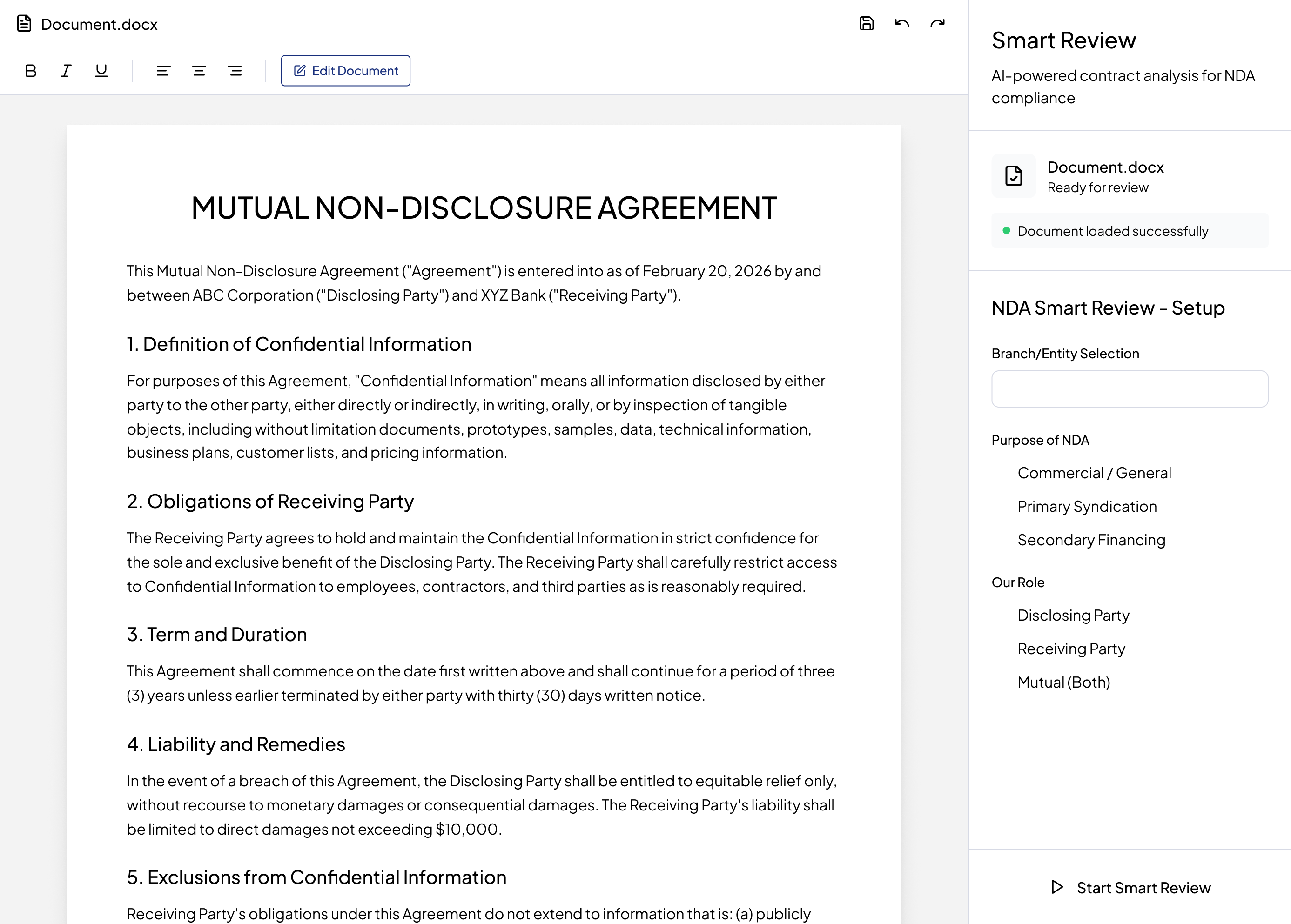
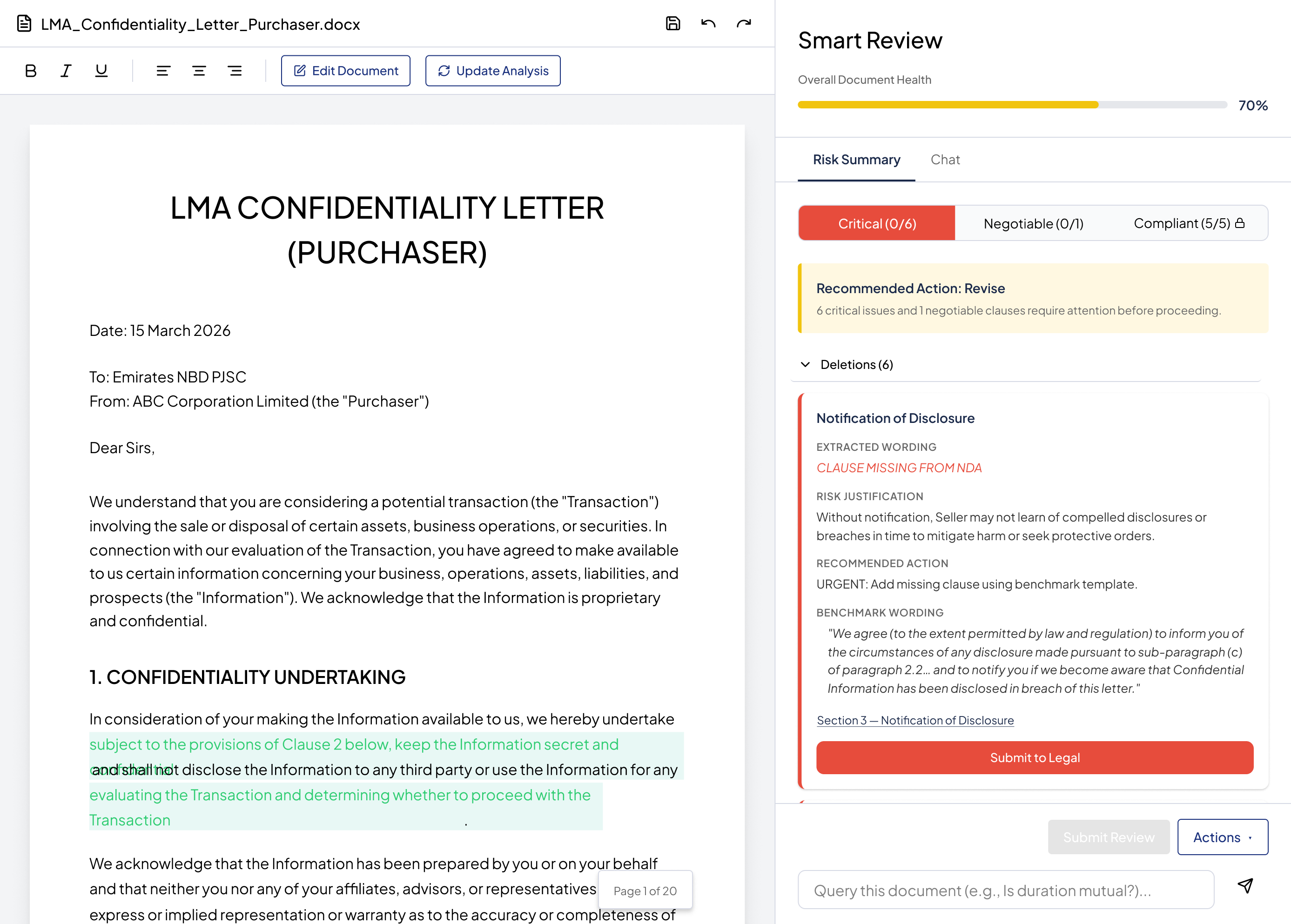
The contract sits on the left, exactly as a lawyer expects it. A review panel sits alongside on the right, reading the document and marking what needs attention — red for risky, amber for negotiable, green for fine.
Each flagged clause shows what changed, where, why it was flagged, and what to do about it: swap in the bank's standard wording, or pick from pre-approved alternatives.
4 · The decisions
Make it look like Word. Legal teams already work inside document interfaces all day. Building around that pattern meant nobody had to learn anything — no new mental model, no cognitive cost, just their existing habits with better tools alongside.
Make risk scannable, not readable. Colour and category instead of a wall of flagged text. Someone senior can read the risk profile of a contract without opening a single clause.
5 · What I got wrong
The first version split the flagged changes into separate tabs. Logical on paper, but it meant switching between views to understand one document. Replaced with a single scrollable list, same groupings, no tabbing.
6 · Reflection
I had a lot of fun with this one, and the business head's feedback when I presented it was the best I got this year.
The bit I keep coming back to is the Word decision. The instinct as a designer is to build something that looks like your work. The better call was building something that looked like theirs.