List Management — Compliance
What list management is
List management is how a bank keeps track of who it isn't allowed to do business with — people and companies under sanctions, on government watchlists, or flagged internally as high risk. Those lists change constantly, and the bank is legally required to keep its own copy current.
Adding, removing or editing a name is called a submission, and no one person can do it alone. One person makes the change, another approves it. That way a single mistake — or a single bad actor — can't quietly let someone through.
Where I came in
Phase 1 was already live. I came in as sole designer on Phase 2.
This was one of my first projects at the bank and I had no idea what was going on. Compliance, watchlists, maker-checker, half a dozen acronyms a day. I was confused for weeks.
What got me through was asking questions even when they made me look stupid. Slowly the ambiguity stopped being uncomfortable and started being the job.
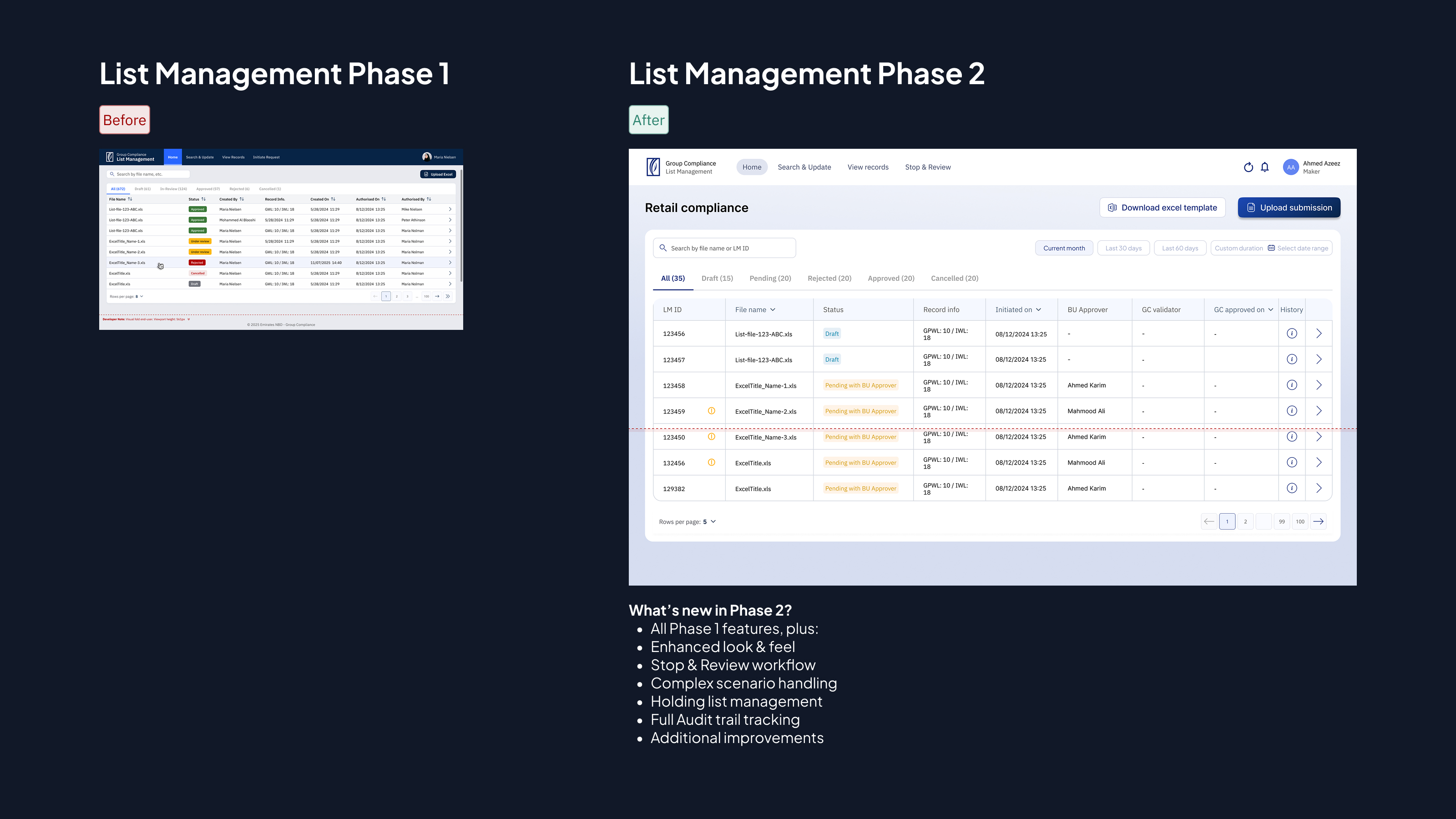
What Phase 2 added
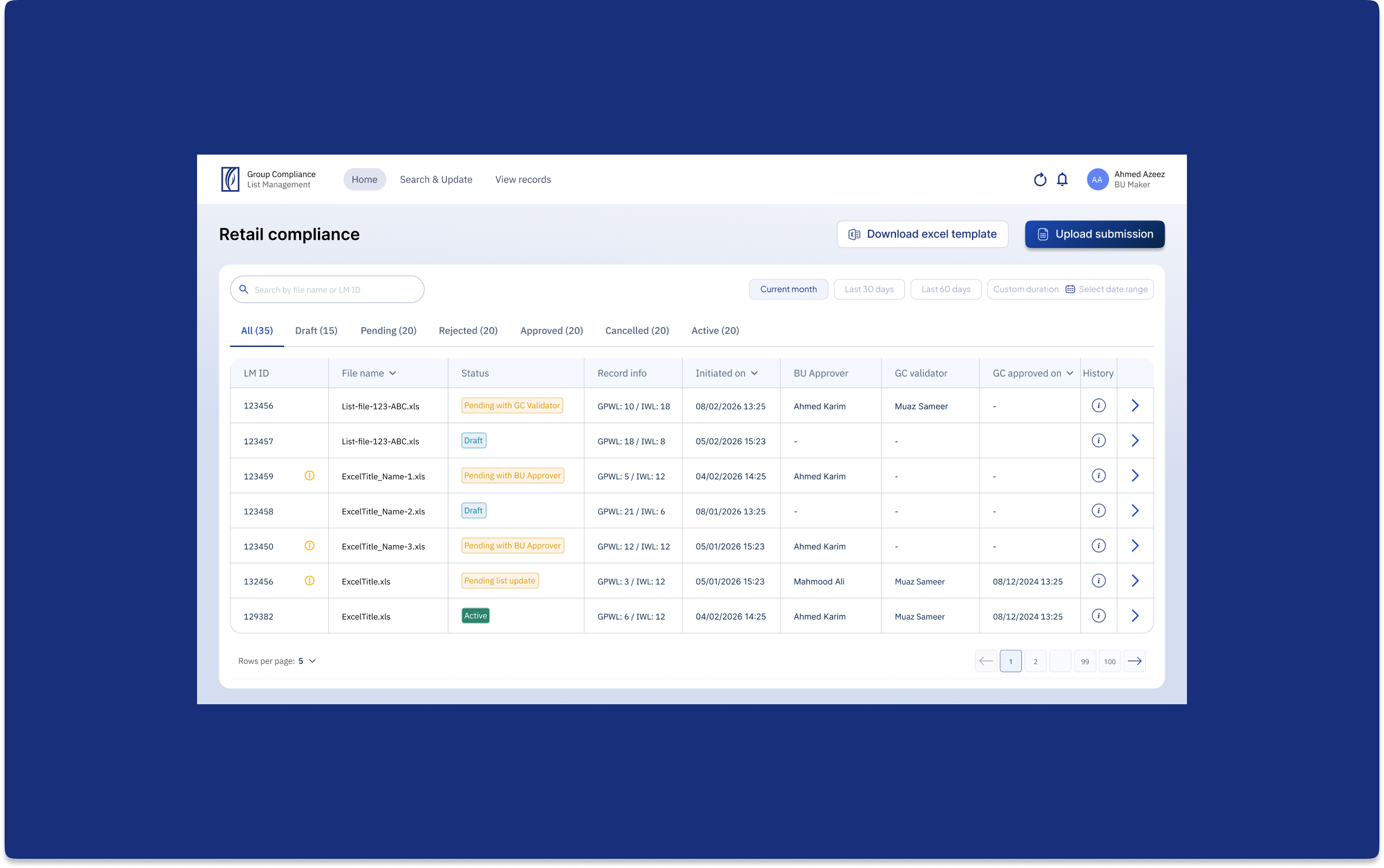
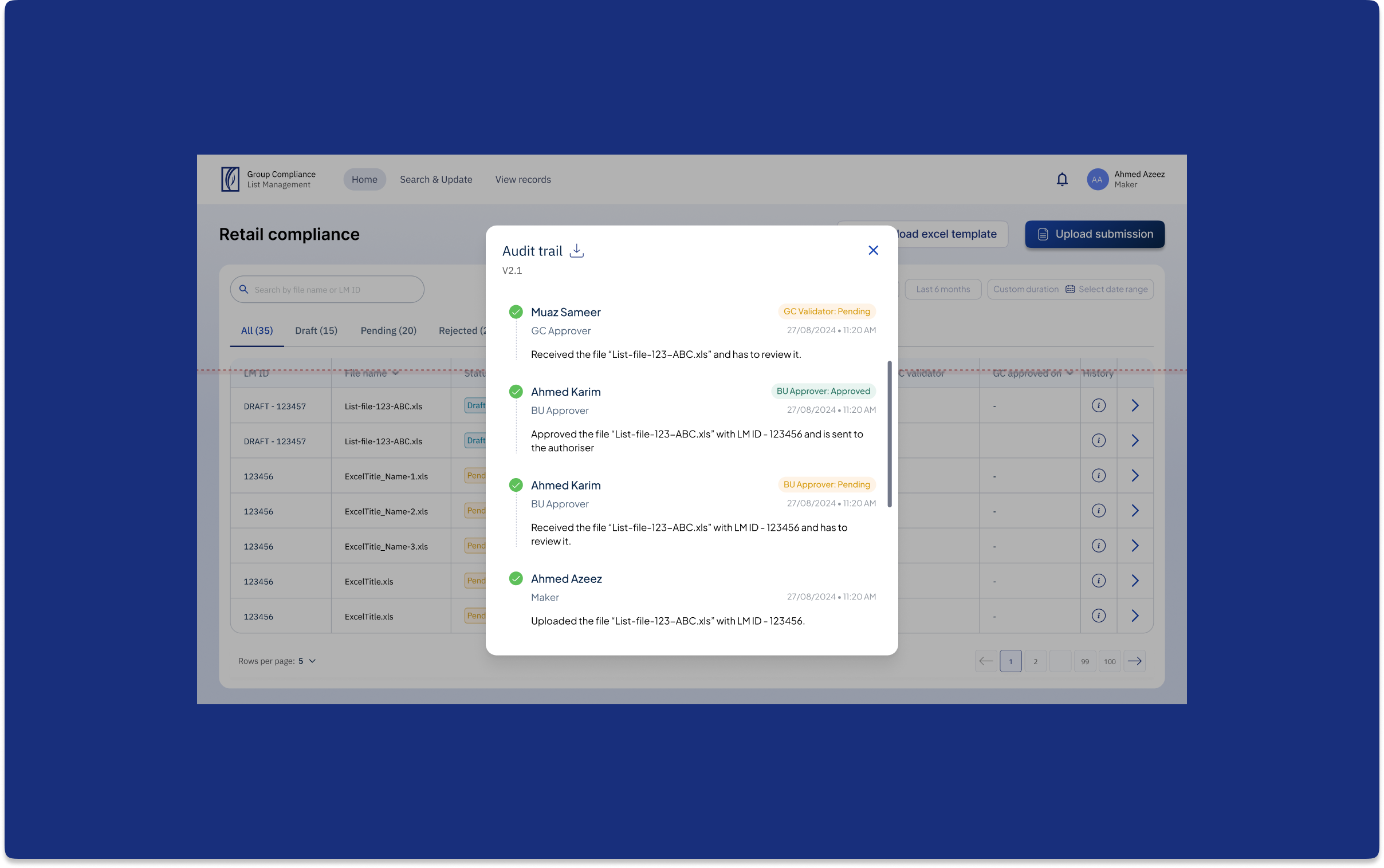
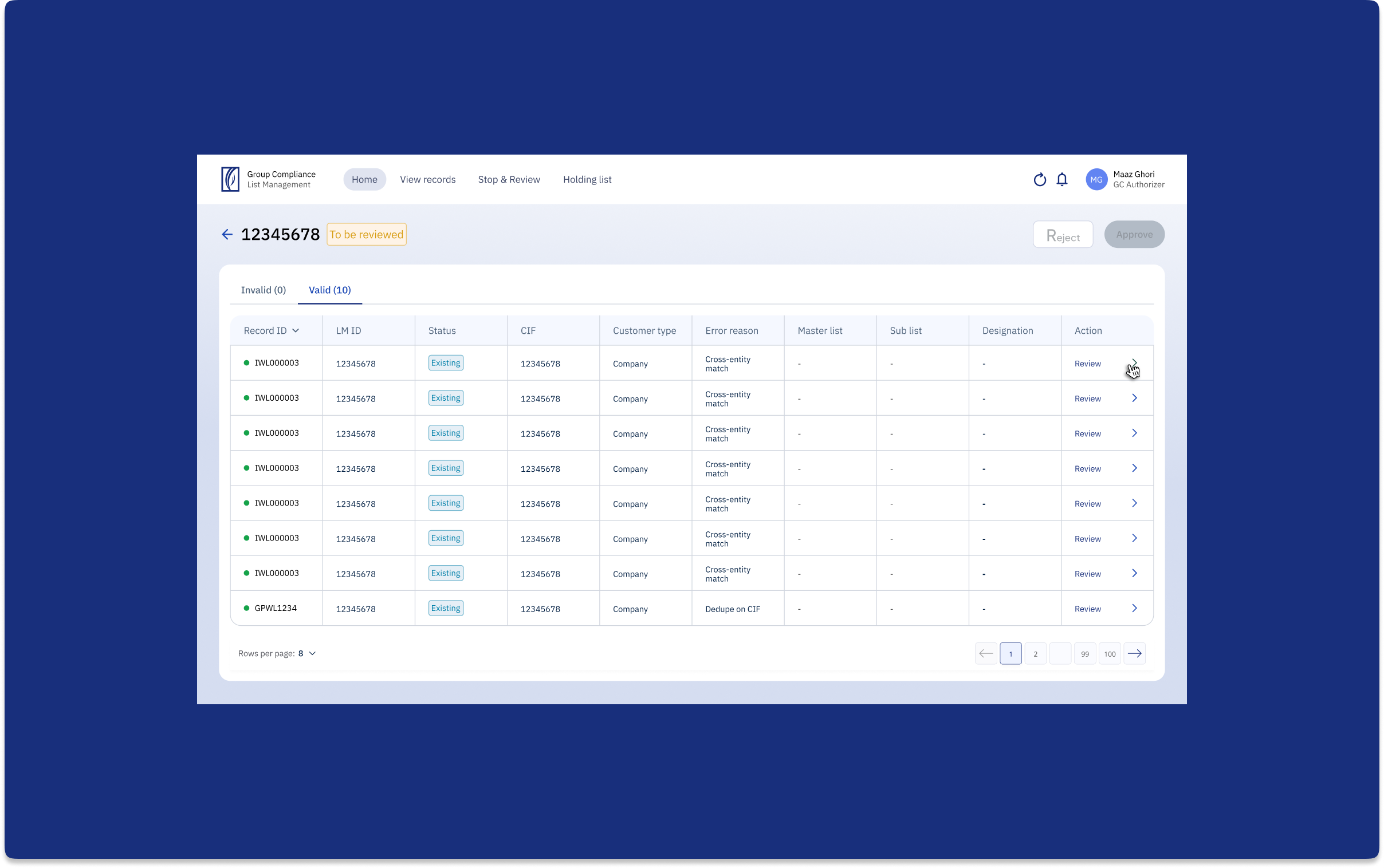
A visual overhaul of the existing tool, plus what the business needed next: a stop-and-review workflow, handling for the more complex cases, holding lists, and full audit trail tracking.
Holding the system while keeping people onside
Stakeholders asked for components that didn't exist in our design system. Building them would have meant breaking the consistency the system existed to protect — the reason a bank has one is so a person moving between tools isn't relearning the interface every time.
But refusing outright doesn't work either. These were people who knew their part of the business far better than I did.
So most of the time I found the version that worked: taking a component we already had and adapting it to do what they needed, rather than inventing something new. Everyone got what they were after and the system stayed intact.
Sometimes there was no version, and I had to say no. That's the harder skill — pushing back in a way where you both still win.
The hard part wasn't the design
It was alignment. Requirements changed constantly, and the real work was making sure every team agreed on what we were building before anyone built it.
Scope creep is expensive in a bank — a feature nobody agreed to costs design time, development time, and testing time across several teams. So every addition had to be justified before it went in. Saying no, or saying not yet, protected other people's time as much as mine.
It took over six months to reach production. Designed in Figma throughout.
Shipped
Phase 2 went into development and shipped. It's the only work of mine that's live in production, and I'm proud of it.
Reflection
I came from startups where everything moved fast. This taught me patience — decisions take longer, requirements change, and the timeline isn't yours to set.
But the feedback when I presented Phase 2 to the stakeholders was the proudest I'd felt in the role. Six months of confusion, and then a thing people actually use.
There's more to this project than I can show. Compliance work comes with limits on what leaves the building.